


Description
Create a fun and stylish home decoration with Assembli’s Paper Sliceform Puzzles!
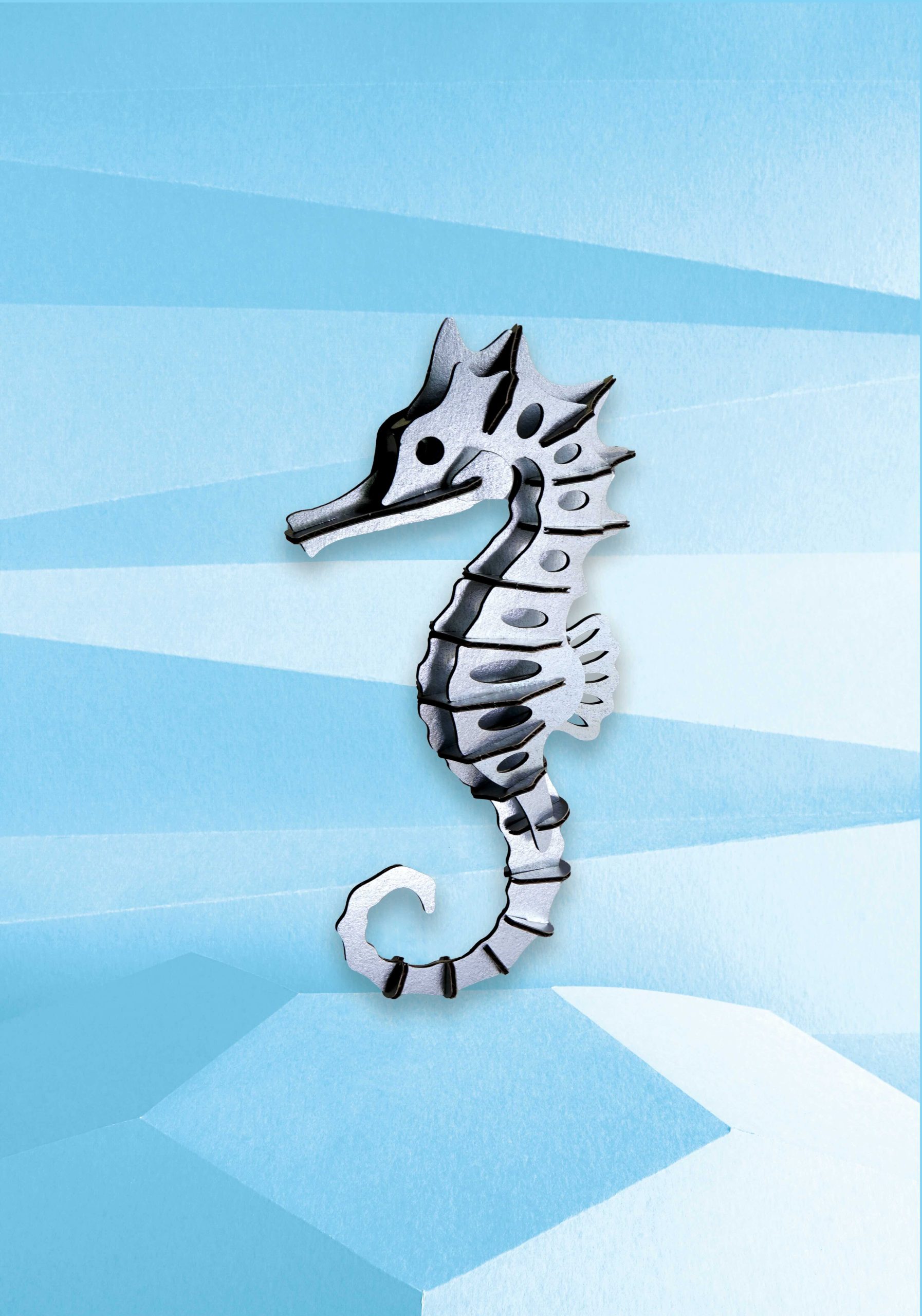
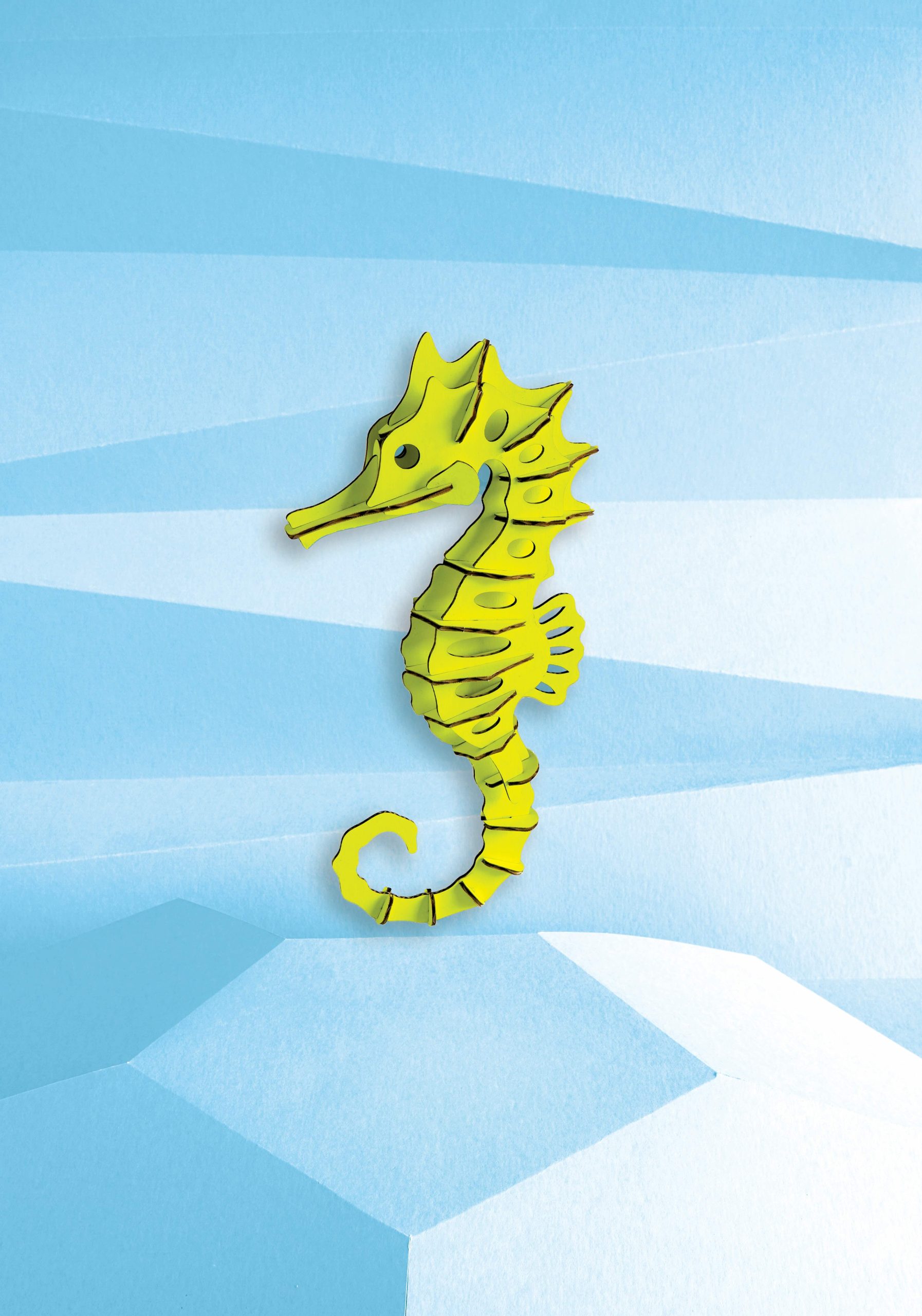
This large Paper Seahorse is ready to liven up your interior!
The Paper Seahorse Large Sliceform Puzzle contains:
- three coloured templates
- one white template
- a sheet with clear instructions
Please note that this DIY comes with a paper wall mount only. If you would like to stand the seahorse on a desk or other surface, we would recommend adding the DIY Table Display Wood.
Also available in a bright fluor pink, orange and yellow!

This product is made out of FSC® certified paper.
Seahorse facts:
The scientific name of the seahorse is the Hippocampus. Seahorses range in length from more than 30 centimetres to under 2,5 centimetres! There are more than 40 known species of these ‘horses of the sea’. Seahorse are actually fish though they don’t look like them. Their tough, bony body makes them pretty tough for other fish to eat, that is why they don’t have many natural predators. Seahorse couples are very romantic. Every morning they swim and ‘dance’ together and stay together with one partner for long periods of time.
The woman doesn’t carry the babies, the man does! After the mating, female seahorses will place their eggs into an oviduct in the body of the male, which is called a brood pouch. Then the males settle into an area to rest throughout gestation, which can last up to a number of weeks. When it’s finally time for the babies to be born, the father’s body experiences strong contractions that shoot the young out of his pouch. As little as five to as many as 1,000 baby seahorses, can be born to the world in a single birthing session. Estimates suggest that only about 0.5% of the babies will survive.
Seahorses are really poor swimmers. They are the slowest of all fish because they only have a tiny fin in the middle of their backs. This one little fin can beat back and forth up to 50 times a second, but the size of the fin is so tiny that it doesn’t make much progress travelling. However, seahorses are quite unique in that they can not only move forward, but also up, down and backward.


